What lab tests like Consumer Reports' say about electric toothbrushes
Consumer Reports' scores sit behind a paywall, so we don’t repeat them. Here’s what lab-style testing measures, what it misses, and four brushes that make sense whatever a lab says: the Oral-B Pro 1000, Sonicare 4100, Oral-B iO3 and Aquasonic Black Series.
Written by Nora Lindqvist. Last checked and updated .
Amazon links on this page are affiliate links: if you buy, we may get a small cut, and your price stays the same. How this site is funded.
Our three, in ten seconds
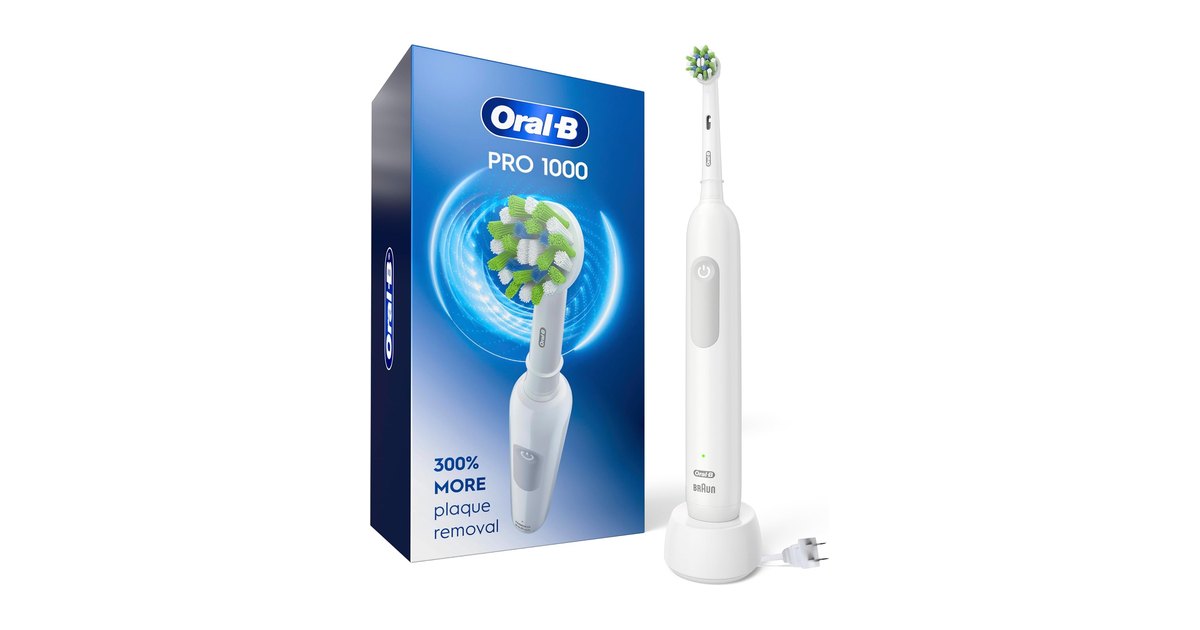 Consistent top pick for valueOral-B Pro 1000A fixture on budget lists for over a decade.about $50 on Oct 30, 2026Today’s price
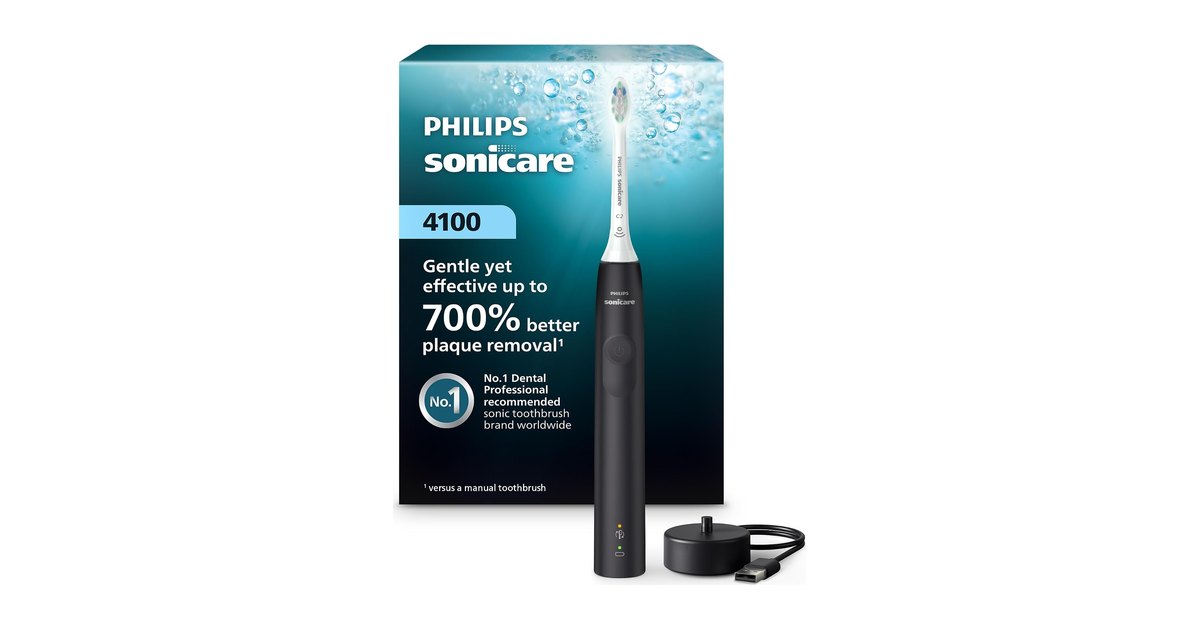 Consistent top sonicPhilips Sonicare 4100A long-running top sonic pick across testers.about $50 on Oct 30, 2026Today’s price
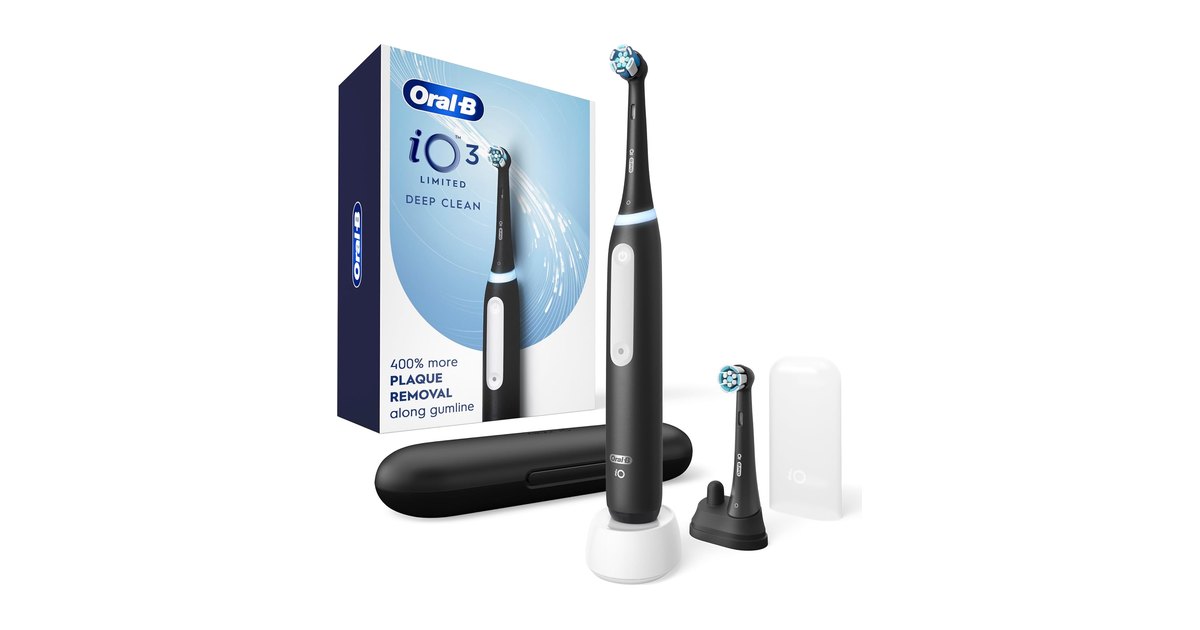 Strong cleaning, better comfortOral-B iO Series 3iO models score well on cleaning wherever they’re tested, and the iO3 is the cheapest with the full iO motor and…about $110 on Oct 30, 2026Today’s price
Jump to a section
- How lab testing works
- What lab tests miss
- Brushes that do well wherever they’re tested
- Oral-B Pro 1000
- Philips Sonicare 4100
- Oral-B iO Series 3
- Aquasonic Black Series
- How to read a lab score
- What to check that labs usually don’t
- Our own checks
- When a lab result should change your mind
- Five questions to ask of any “best” list
- Things readers check with us
Consumer Reports runs one of the few genuine lab tests of electric toothbrushes, and its full ratings are for paying members, so we can’t (and won’t) republish its scores here. What we can do is explain how this kind of testing works, what it has found in general, and which brushes perform well across every independent tester we track.
How lab testing works
Consumer Reports describes testing toothbrushes on three main things:
- Cleaning ability. Panellists brush for two minutes with each brush, and plaque is measured. For brushes with several modes or heads, the score uses the mode and head combination that performs best in everyday use. This is the biggest part of the overall score.
- Battery performance. How long a rechargeable brush takes to charge, how long it runs, and how easy charging is.
- Ease of use. Handling, controls and day-to-day convenience.
Its headline finding, stated publicly, is the one we’d underline: you don’t need the most expensive model, or one of the best-known brands, to get a good clean.
What lab tests miss
- Long-term durability. A few weeks of testing can’t tell you whether the battery fades at 18 months. Owner reviews are better at this.
- Running costs. Brush-head prices over three years often exceed the handle price, and most scores ignore them.
- Your mouth. A brush that scores well on plaque might be too intense for sensitive teeth, or too big for a small mouth.
- New models. Testing lags launches. The 2026 Sonicare range and Laifen Wave Pro have limited independent data so far.
Brushes that do well wherever they’re tested
These are the models that have kept appearing near the top of independent hands-on tests for years, which tells you more than any single ranking.
| Brush | Picked for | Type | Price on Oct 30, 2026 | Buy |
|---|---|---|---|---|
| Oral-B Pro 1000 | Consistent top pick for value | Oscillating-rotating with pulsation | about $50 | Price |
| Philips Sonicare 4100 | Consistent top sonic | Sonic (31,000 movements a minute) | about $50 | Price |
| Oral-B iO Series 3 | Strong cleaning, better comfort | Oscillating-rotating with magnetic iO drive | about $110 | Price |
| Aquasonic Black Series | The budget brush testers keep including | Sonic (40,000 vibrations a minute) | about $40 | Price |
Consistent top pick for value
Oral-B Pro 1000
- Cleaning actionOscillating-rotating with pulsation
- Pressure warningYes: pulsing stops when you press too hard (no light)
- BatteryAbout 1 to 2 weeks
- HeadsClassic Oral-B round heads (CrossAction, Sensitive, 3D White)
- Amazon price, Oct 30, 2026about $50
A fixture on budget lists for over a decade. Lab-style tests favour its cleaning; it loses points for noise and battery.
Consistent top sonic
Philips Sonicare 4100
- Cleaning actionSonic (31,000 movements a minute)
- Pressure warningYes: the handle pulses
- BatteryUp to 14 days
- HeadsC2 Optimal Plaque Control (click-on)
- Amazon price, Oct 30, 2026about $50
A long-running top sonic pick across testers. Strong on ease of use and battery for its price, and refreshed in July 2026 with three intensities.
Strong cleaning, better comfort
Oral-B iO Series 3
- Cleaning actionOscillating-rotating with magnetic iO drive
- Pressure warningSmart sensor: red when too hard, green when right
- BatteryAbout 2 weeks
- HeadsiO heads (Ultimate Clean, Gentle Care, Radiant White)
- Amazon price, Oct 30, 2026about $110
iO models score well on cleaning wherever they’re tested, and the iO3 is the cheapest with the full iO motor and pressure ring.
The budget brush testers keep including
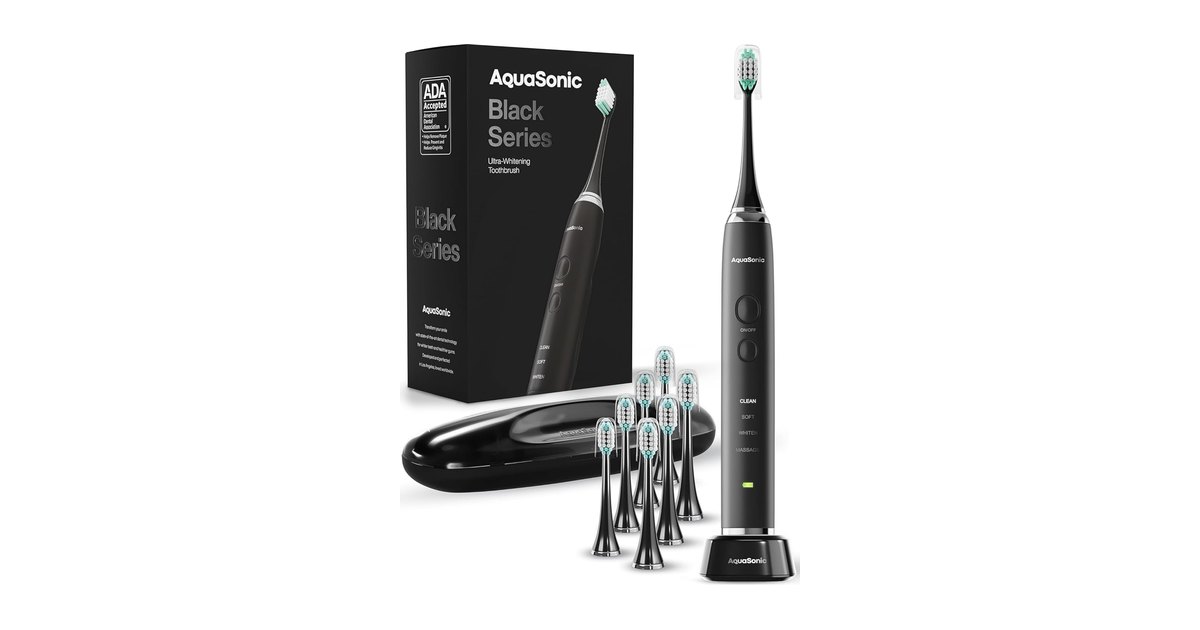
Aquasonic Black Series
- Cleaning actionSonic (40,000 vibrations a minute)
- Pressure warningNo
- BatteryAbout 4 weeks
- HeadsAquasonic DuPont heads (8 in the box)
- Amazon price, Oct 30, 2026about $40
Several testers include it as a gentle, inexpensive pick. It shows how close a $40 sonic can get, with the caveat that it lacks a pressure sensor.
Should I just buy whatever has the highest score?
Use scores to build a shortlist, then decide on fit: your budget for heads, your sensitivity, whether noise bothers you. Two brushes a few points apart in a lab are effectively equal in your bathroom.
How to read a lab score
A lab score is a bundle of measurements: plaque removal on test teeth, ease of use, noise, battery, sometimes durability. Two brushes a few points apart are effectively tied. The useful signals are a brush that scores well across several publications and years, and a brush that scores badly on something specific you care about, such as noise or battery.
What to check that labs usually don’t
Labs test new brushes. They rarely tell you what the heads cost in year three, whether the battery fades after 18 months, whether the model is about to be replaced, or whether the listing you’re looking at is the same version they tested. That last one matters this year: Amazon US sells two Sonicare 4100s and two “9900 Prestige” brushes with the same names and different features.
Our own checks
On October 30, 2026 we checked more than 140 Amazon US listings for the brushes on this site and their heads, recording who sells each one, its model number, when it went on sale and its price that day. Every price on this page comes from that check, rounded and dated. We read each brand’s specifications and published research, and owner reviews for repeated problems. We don’t run a lab, and we don’t claim lab results.
When a lab result should change your mind
If a test you trust finds a brush noticeably weaker at plaque removal, or noisy enough to bother you, take it seriously. If it ranks one good brush a few points above another, choose on comfort, pressure feedback and head cost instead.
Five questions to ask of any “best” list
Is the brush still sold by the brand? Which model number did they test? What do the heads cost? Does it have a pressure sensor? And when was the list last updated? A list that can’t answer those is ranking brushes from memory.
Is it really better than a $3 manual brush?
On average yes, by a modest amount, and the gap is widest for people who rush. The timer is doing as much work as the motor.
What we checkedReviews of the clinical trials put powered brushes ahead of manual ones on both plaque and gum inflammation, with the largest reported effects on the oscillating style.
Our pick for thisOral-B Pro 1000Price
Oral-B or Sonicare? They feel nothing alike.
They are two different jobs. Oral-B polishes one tooth at a time with a small spinning head. Sonicare vibrates a normal-shaped head and cleans more by sweep than by scrub. Pick the one you will still be using in March.
What we checkedTrials give the oscillating style a small edge on plaque. Owner reviews give Sonicare the edge on comfort and noise. Both beat a manual brush.
Our pick for thisOral-B iO Series 3Price
Things readers check with us
Consumer Reports' current ratings are available to its members. Publicly, it has said its tests show you don’t need the most expensive model or a big brand to get a good clean.
How does Consumer Reports test electric toothbrushes?
It measures cleaning ability with panellists brushing for two minutes, battery performance and ease of use. Cleaning is the biggest part of the score.
Are lab-tested toothbrushes better than Amazon best-sellers?
Not necessarily. Best-seller lists reflect price and promotion; lab tests reflect performance. Check both, then consider running costs.
Does Consumer Reports test toothbrush heads?
Lab tests usually come with the head in the box. Your results over years depend on replacing heads every three months, whichever brand you buy.
Should I trust Amazon’s best-seller list instead?
It tells you what’s popular, not what’s best for your mouth. The Pro 1000 and Aquasonic are both best-sellers and both good; plenty of best-sellers aren’t.
Source: Consumer Reports, Best Electric Toothbrushes (methodology description; ratings for members).