Oral-B vs Sonicare: which should you buy?
Oral-B for most people with healthy gums: its small round head has a slight edge in plaque studies. Sonicare if your teeth or gums are sensitive, or you want a quieter, gentler brush. Our picks are the Oral-B iO3 and the Sonicare 5900.
Written by Nora Lindqvist. Last checked and updated .
Amazon links on this page are affiliate links: if you buy, we may get a small cut, and your price stays the same. How this site is funded.
The call
Both beat a manual brush by a wide margin. Oral-B has the small edge in trials; Sonicare is easier on sensitive mouths.
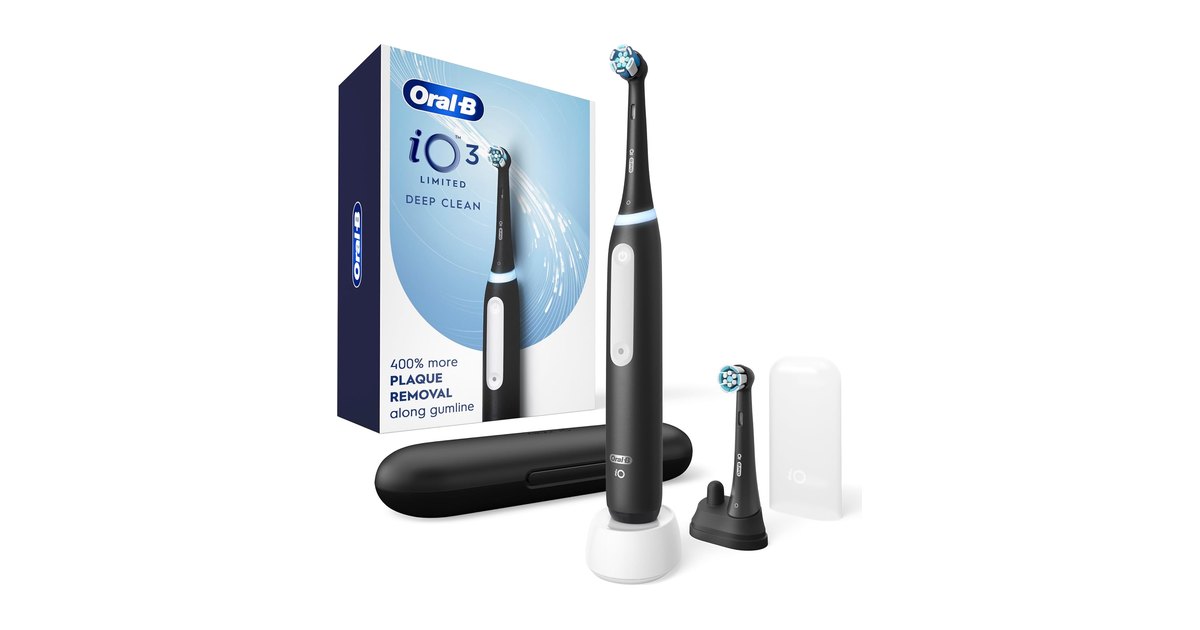
Choose the Oral-B if
your gums are healthy, you build up tartar between cleanings, or you like a polished, tooth-by-tooth clean. Our pick: the iO3.
about $110 on Amazon US, Oct 30, 2026
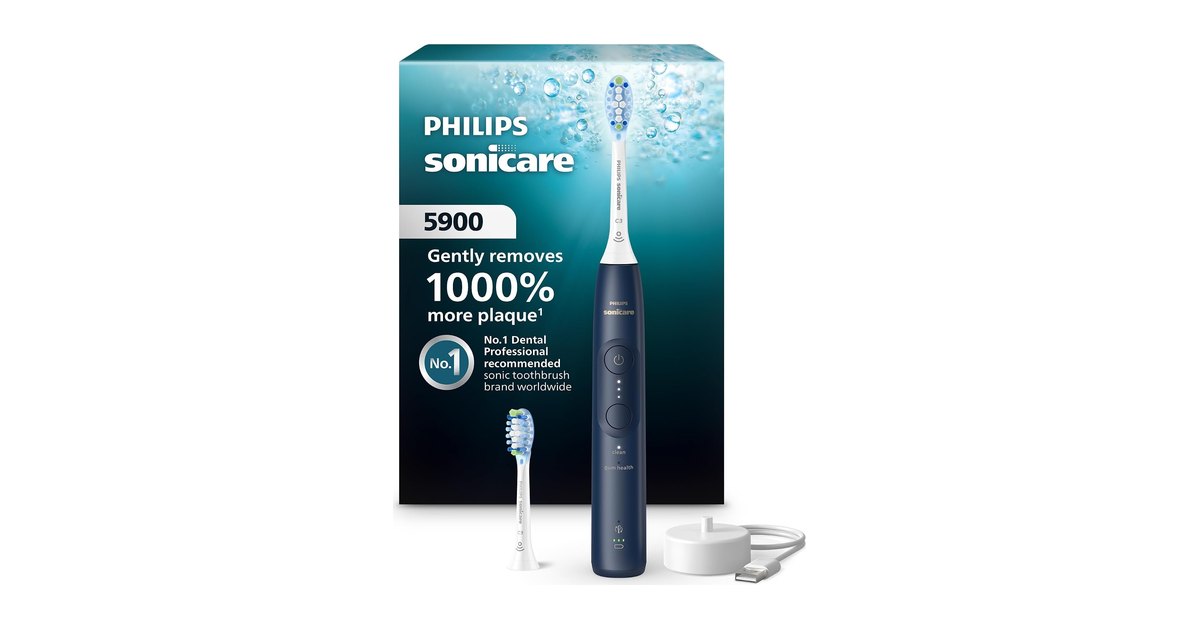
Choose the Sonicare if
you have sensitive teeth or receding gums, dislike vibration and noise, or want three weeks between charges. Our pick: the Sonicare 5900.
about $90 on Amazon US, Oct 30, 2026
Jump to a section
This is the most common question in electric toothbrush shopping, and the honest answer is that both are excellent. What differs is how they clean, how they feel, and what they cost to run. Once you know which of those matters to you, the choice tends to make itself.
The quick answer
- Choose Oral-B if you want the most thorough clean per minute, build up tartar between dental visits, or like cleaning one tooth at a time.
- Choose Sonicare if you have sensitive teeth or receding gums, dislike vibration and noise, or want longer battery life.
- Can’t decide? Buy whichever good model is on sale. The gap between them is far smaller than the gap between brushing well and brushing badly.
How they clean
Oral-B uses a small round head that oscillates and rotates through a short arc, and on most models also pulses toward the tooth. You hold it on each tooth for a moment, then move on. The newer iO range drives the head magnetically, which makes it much quieter and smoother.
Sonicare uses a conventional toothbrush-shaped head that vibrates side to side over a tiny distance, tens of thousands of times a minute. You glide it slowly along the gumline. Philips’ 2026 models use a new drivetrain it calls Next-Generation Sonicare technology.
The clinical evidence, briefly
The 2014 Cochrane review found clear benefits from powered brushes over manual ones, with the clearest evidence for the rotation-oscillation type. Head-to-head trials since then have often shown a small advantage for oscillating-rotating brushes on plaque and gingivitis. Small is the key word: both styles beat manual brushing by a much wider margin than either beats the other.
How they feel
Oral-B feels busier and, on older models, louder. Sonicare tickles at first, then feels gentle. People with sensitive teeth usually prefer Sonicare. People who like the “just been to the dentist” smoothness often prefer Oral-B.
Model-by-model equivalents
| Budget | Oral-B | Sonicare |
|---|---|---|
| Cheapest worth buying | Pro 1000 | Sonicare 4100 |
| Best value step up | iO Series 3 | Sonicare 5900 |
| App and tracking | iO Series 5 | Sonicare 7300 |
| Flagship | iO Series 9 | Prestige 9900 or Next-Gen DiamondClean |
| Kids | iO Kids, Pro Kids 3+ | Sonicare for Kids |
| iO3 | Sonicare 5900 | |
|---|---|---|
| Cleaning action | Oscillating-rotating with magnetic iO drive | Sonic, Next-Generation drivetrain |
| Brushing modes | 3 (Daily Clean, Sensitive, Whitening) | 2 (Clean, Gum Health) |
| Intensity levels | 1 | 3 |
| Pressure sensor | Smart sensor: red when too hard, green when right | Yes: haptic buzz when you press too hard |
| Timer | Light-ring timer, 30-second pacer, head-change alert | SmartTimer, BrushPacer every 20 seconds, head reminder |
| Battery (brand figure) | About 2 weeks | Up to 21 days |
| Charging | Magnetic stand | USB-A charging stand (no plug in the box) |
| Travel case | Yes (Limited bundle) | No |
| App | No | No |
| ADA Seal | Not stated on listing | Not stated on listing |
| Brush heads | iO heads (Ultimate Clean, Gentle Care, Radiant White) | C3 Two-in-one (click-on) |
| Warranty | 2 years | 2 years |
| Status | Current; sold on Amazon US as the iO3 Limited bundle | New generation; on Amazon US since December 2025 |
| Model number (US listing) | iO G3.2Q6.2KD | HX7133/02 |
| On Amazon US since | August 2022 | December 2025 |
| Amazon US check | Sold by Amazon.com (Oct 30, 2026) | Sold by Amazon.com (Oct 30, 2026) |
| Amazon price (Oct 30, 2026) | about $110 | about $90 |
| Est. 3-year cost | $212 | $240 |
| Buy | Price | Price |
Heads and running costs, compared
Head prices are closer than you’d think. On Amazon US on October 30, genuine iO heads were about $10 each, Sonicare C2 about $10.50 and A3 about $14.50. Classic Oral-B heads are cheapest in big store multipacks, though Amazon only showed us a two-pack.
Handle Replacement heads
* Partly estimated: the handle had no main Amazon offer, the exact head wasn’t on sale, or only a reseller listed heads.
Battery and charging
Sonicare generally lasts longer per charge: up to 14 days on the 4100 and up to 21 days on the new 5700 and 5900, by Philips’ figures. Most iO models manage around two weeks; the Pro 1000 a week or two.
Heads: what fits what
Oral-B runs two head systems. iO heads fit only iO handles (iO2 to iO10), and classic round heads fit the Pro 1000 and the older Pro, Vitality and Pro 3 brushes. They don’t cross over. Sonicare is simpler: every current adult Sonicare uses click-on heads, so a C2 bought for a $50 4100 also fits a $380 Prestige. If you think you’ll upgrade later, Sonicare’s single fitting is a small but real convenience.
Apps and coaching
Oral-B puts its app on the iO5 and above, and its strength is mapping where you brush; the iO9 adds 3D tracking and a screen on the handle. Sonicare’s app comes with the 7300 and the Prestige models and leans toward guided brushing and settings. Neither app is worth paying for unless you want to fix a habit, such as skipping the back teeth.
Warranty and buying safely
On the Amazon US listings we checked, both brands offer a two-year warranty, and Philips adds a 90-day money-back offer on the new Next-Gen Prestige. Buy from Amazon itself or the brand’s own store: imported units and reseller listings can complicate warranty claims, which is why we skipped a European Sonicare 7100 sold by a third party.
If you’re switching brands
Expect a week of adjustment either way. Moving from Oral-B to Sonicare, slow down: glide the head along the gumline instead of pausing on each tooth. Moving from Sonicare to Oral-B, stop scrubbing: hold the round head on each tooth for a second or two and follow the curve. In both directions, the first few days feel odd and then stop feeling like anything.
“My dentist said Oral-B, my hygienist said Sonicare”
You’ll hear both, and both are right for different patients. A pattern hygienists often describe is Oral-B for people who build up deposits quickly and Sonicare for people with recession or sensitivity. Tell your hygienist which you’re considering; they know your mouth better than any review.
For most people with healthy gums, we lean slightly toward Oral-B, specifically the iO3, for its cleaning and pressure light. For sensitive teeth or receding gums, Sonicare, specifically the 5900 or the budget 4100. Either way, a pressure sensor and a fresh head every three months matter more than the logo.
Oral-B or Sonicare? They feel nothing alike.
They are two different jobs. Oral-B polishes one tooth at a time with a small spinning head. Sonicare vibrates a normal-shaped head and cleans more by sweep than by scrub. Pick the one you will still be using in March.
What we checkedTrials give the oscillating style a small edge on plaque. Owner reviews give Sonicare the edge on comfort and noise. Both beat a manual brush.
Our pick for thisOral-B iO Series 3Price
I already have heads. Will they fit a new handle?
Only inside the same family. Oral-B iO heads fit iO handles and nothing else, classic round heads fit every Oral-B that is not an iO, and any modern click-on Sonicare head fits any modern Sonicare handle.
What we checkedWe mapped every handle on this site to its head family and the price of a genuine pack.
Our pick for thisPhilips Sonicare 5300Price
What people ask us next
Oral-B has a slight edge in plaque-removal studies; Sonicare is gentler and usually has longer battery life. Both are far better than manual brushing.
Which is better for sensitive teeth, Oral-B or Sonicare?
Sonicare, for most people. Oral-B’s iO2 or iO3 on Sensitive mode with a soft head is a good alternative.
Which is cheaper to run?
Classic Oral-B models like the Pro 1000, because their heads are the cheapest. iO and Sonicare heads cost roughly the same.
Which is quieter?
Sonicare and Oral-B iO are both relatively quiet. Classic Oral-B brushes are the loudest.
Which lasts longer per charge, Oral-B or Sonicare?
Usually Sonicare. Philips rates the 4100 at up to 14 days and the 5900 and 7300 at up to 21; most Oral-B iO models manage about two weeks.
Can I use Sonicare heads on an Oral-B, or the other way round?
No. The brands use different fittings, and even Oral-B’s own iO and classic heads don’t swap.