Aquasonic Black Series vs Philips Sonicare 4100
If you press hard or your gums are tender, get the Sonicare 4100: its pressure sensor is the one thing the Aquasonic can’t do. If you already brush gently, the Aquasonic Black Series costs about $110 less over three years.
Written by Dev Marlowe. Last checked and updated .
Amazon links on this page are affiliate links: if you buy, we may get a small cut, and your price stays the same. How this site is funded.
Which to buy
Heavy hands and sensitive gums should spend the extra $10 on the Sonicare 4100. Gentle brushers get more for less with the Aquasonic.
Choose the Aquasonic Black if
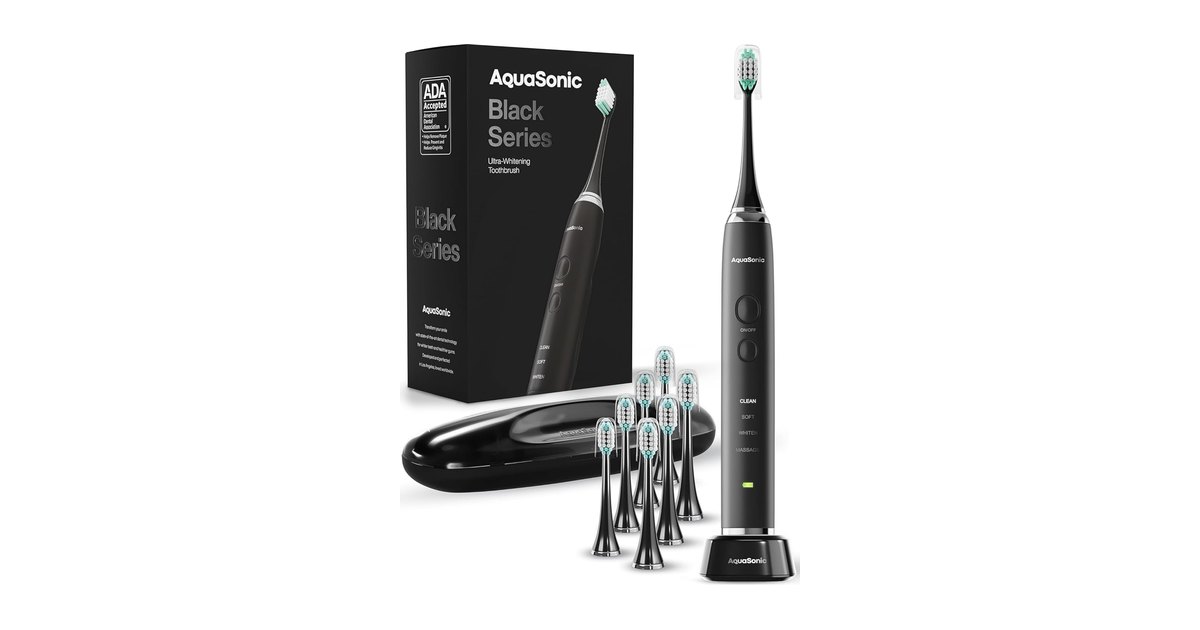
you already brush gently and want the lowest running cost: eight heads, a travel case and a wireless charger come in the box for about $40.
about $40 on Amazon US, Oct 30, 2026
Choose the Sonicare 4100 if
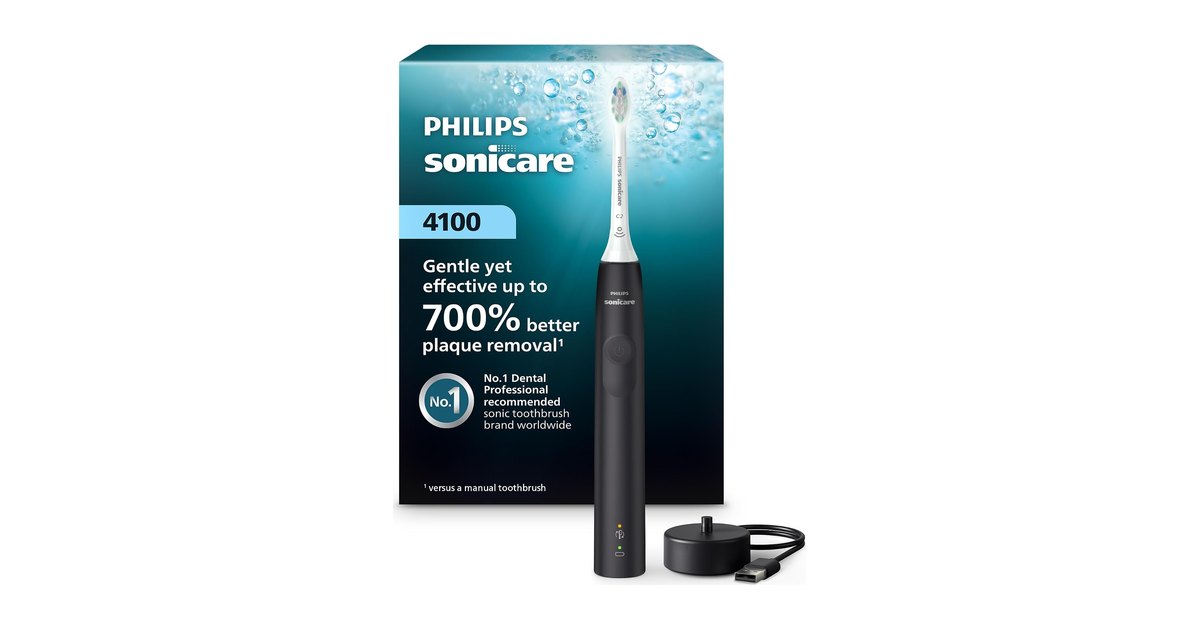
you press hard, have tender gums, or want heads sold in every pharmacy. The pressure sensor earns its extra $10.
about $50 on Amazon US, Oct 30, 2026
Jump to a section
These are the two most popular budget sonic brushes in the US, and they make opposite trade-offs.
| Aquasonic Black | Sonicare 4100 | |
|---|---|---|
| Cleaning action | Sonic (40,000 vibrations a minute) | Sonic (31,000 movements a minute) |
| Brushing modes | 4 | 1 |
| Intensity levels | 1 | 3 on the 2026 HX4031; older HX3681 varies |
| Pressure sensor | No | Yes: the handle pulses |
| Timer | Smart timer with 30-second pulses | SmarTimer, 30-second QuadPacer, EasyStart |
| Battery (brand figure) | About 4 weeks | Up to 14 days |
| Charging | Wireless charging base | Charging stand (USB, no plug) |
| Travel case | Yes | No |
| App | No | No |
| ADA Seal | Yes | Yes |
| Brush heads | Aquasonic DuPont heads (8 in the box) | C2 Optimal Plaque Control (click-on) |
| Warranty | Not stated on listing | 2 years |
| Status | Current; first sold 2017 | Current; refreshed as HX4031 in July 2026 |
| Model number (US listing) | SCTB | HX3681/24 |
| On Amazon US since | June 2017 | December 2021 |
| Amazon US check | Sold by the brand’s Amazon store (Oct 30, 2026) | Sold by Amazon.com (Oct 30, 2026) |
| Amazon price (Oct 30, 2026) | about $40 | about $50 |
| Est. 3-year cost | $50 | $163 |
| Buy | Price | Price |
Aquasonic’s case
Eight heads, a wireless charger, a travel case, four modes and the ADA Seal, all for about $40. Its three-year cost is the lowest of any brush we recommend.
Sonicare’s case
A pressure sensor, a more refined motor and build, BrushSync head reminders and Philips’ warranty support. It’s the brush most testers choose at this price.
Handle Replacement heads
Three years with each, in dollars
The handle prices are $10 apart. The heads are where the two brushes split. The Aquasonic ships with eight heads, and at one every three months that is two years of brushing before you buy anything. Genuine refills were about $2.49 each on Amazon US when we checked, so year three adds roughly $10. The Sonicare 4100 ships with one C2 head, and C2 refills were about $10.26 each in a three-pack, so you’d spend a bit over $110 on heads across the same three years.
Put together, the Aquasonic comes out near $50 for three years and the 4100 near $165. That gap is real money, and it’s the honest case for the Aquasonic. It only stops being the better deal if your brushing habit damages your gums, because a missing pressure sensor is cheap until the dentist mentions recession.
How they feel in the mouth
Aquasonic quotes 40,000 vibrations a minute; Philips quotes 31,000 bristle movements a minute for the 4100. Those figures aren’t measured the same way and don’t predict how clean your teeth get. What you’ll notice is the character. The Aquasonic feels stronger and buzzier on its top mode, and its four modes give you somewhere to retreat if that’s too much. The 4100 is softer from the first brush, and the July 2026 version (model HX4031) adds High, Medium and Low settings plus an EasyStart ramp across your first 14 brushes.
Charging, travel and the bathroom shelf
The Aquasonic sits on a wireless charging base and claims about four weeks per charge, and its hard case holds the brush and two heads. The 4100 charges from a USB stand with no wall plug in the box, runs up to 14 days, and has no case. If you travel a few times a year, that difference alone can decide it: the Aquasonic goes in the bag as it comes.
Heads after year two
Sonicare’s click-on heads fit every current adult Sonicare, they’re on supermarket shelves, and you can switch to softer or gum-focused heads whenever you like. Aquasonic sells its own heads for the Black Series, mainly through its Amazon store. They’re cheap and they last, but you’re tied to one seller, and we wouldn’t assume a Sonicare head fits.
How much does the pressure sensor matter?
More than any other feature. Pressing too hard is one of the main ways people damage gums and enamel, and most people don’t know they do it. If you already have recession, sensitivity or splayed bristles after a few weeks, the sensor alone justifies the Sonicare.
Sonicare 4100 for most people, because of the pressure sensor. Aquasonic if you brush gently and want the lowest total cost, or you need a cheap brush with a travel case.
Three buyers, three answers
A student, or a first electric brush for someone who brushes gently: the Aquasonic. About $40 with eight heads means two years before you spend anything else, and genuine refills were about $2.50 each on October 30.
Someone whose dentist has mentioned receding gums: the 4100. The pressure sensor is the point, and the July 2026 version’s lowest intensity is gentler still.
Two people sharing a bathroom: if neither of you scrubs, one Aquasonic box covers both of you for a year, and a second handle can come later. If either of you presses hard, buy two 4100s.
Over three years the Aquasonic costs roughly a third of what the Sonicare does, and almost all the difference is heads.
How much will the replacement heads cost me?
Roughly $30 to $60 a year per person at four heads a year, which over three years usually beats what you paid for the handle. Price the heads before you pick the brush, not after.
What we checkedGenuine heads we priced on Amazon US on October 30 ran from about $2.49 each (Aquasonic, eight in a box) to about $18.46 each (Quip Rev).
Our pick for thisAquasonic Black SeriesPrice
Will an electric brush push my gums back?
Not on its own. Recession comes from force and from sawing sideways, and a powered head removes the sawing. Buy a handle that tells you when you are pressing, then rest it on the tooth and let it work.
What we checkedEvery brush on this page over $50 warns you about pressure. The Pro 1000 stops pulsing; the iO3 turns its neck ring red; Sonicare handles buzz in your hand.
Our pick for thisOral-B iO Series 3Price
Odds and ends worth knowing
It cleans well for the price and is ADA accepted, but it lacks a pressure sensor and the build is less refined.
Which is cheaper over three years?
The Aquasonic, because eight heads are included.
Which is gentler for sensitive teeth, the Aquasonic or the Sonicare 4100?
The 4100, especially the HX4031 version on its Low setting. It also warns you when you press too hard, which matters more for sensitivity than any mode.
Is 40,000 vibrations a minute better than 31,000?
Not by itself. Brands count movements differently, and the size of each movement matters as much as the count. Choose on pressure sensing, head choice and comfort instead.
Do I need a wall plug for either brush?
The 4100 ships with a USB charger and no adapter, so use any phone plug. The Aquasonic’s wireless base is all you need to charge it.